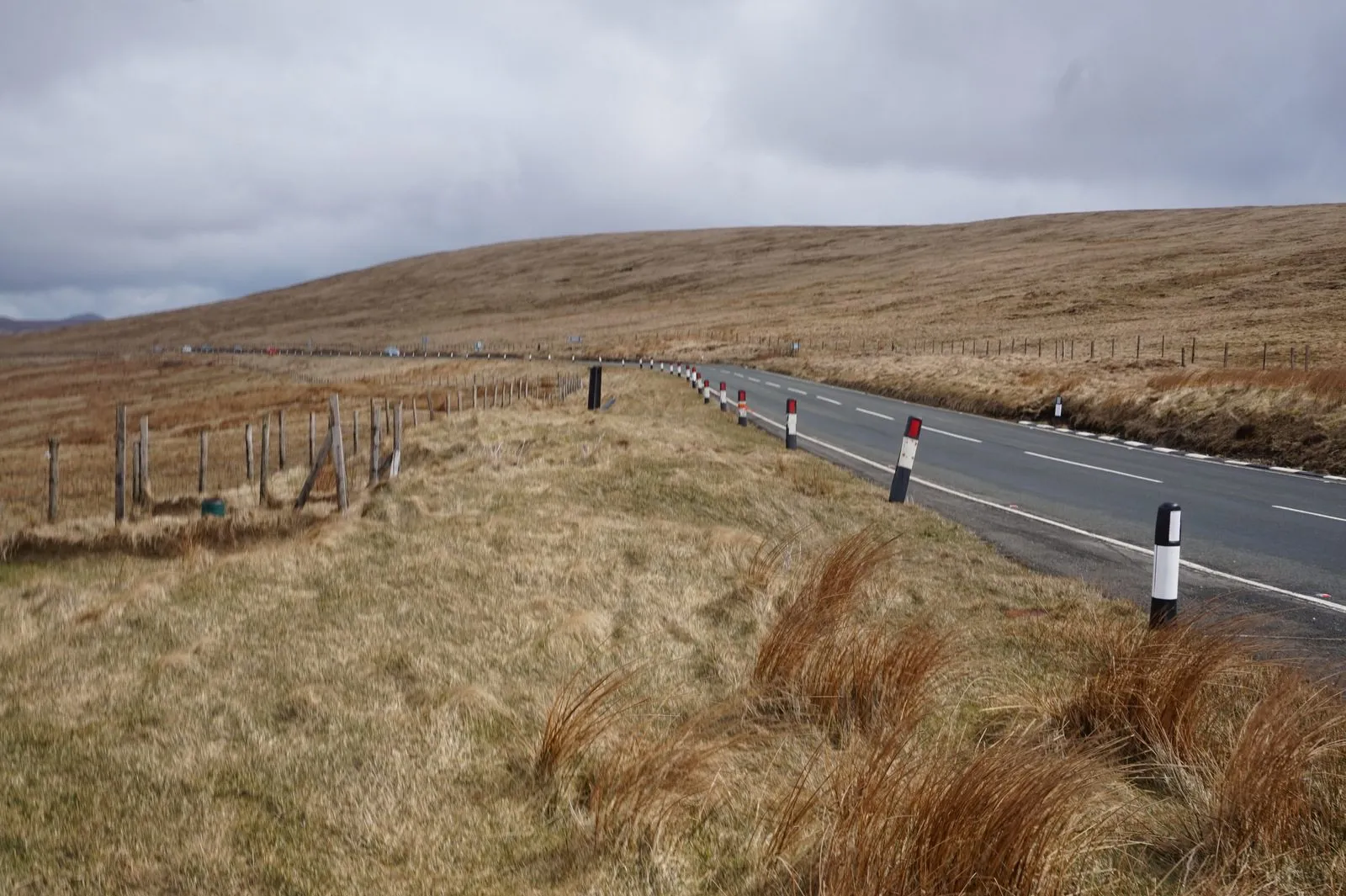
Photo: Ian S / Wikimedia Commons, CC BY-SA 2.0
Driving on the Isle of Man — speed limits, the Mountain Road and TT rules
Photo: Ian S / Wikimedia Commons, CC BY-SA 2.0
Last checked
Isle of Man speed limits: no national limit, so many rural roads have none. Towns are 30mph (some streets 20), R and L plates 50mph, towing 40. Plus TT rules.
Driving on the Isle of Man is mostly easy: quiet roads, short distances and no motorways. It’s the handful of quirks that catch visitors out, starting with the famous one: there’s no national speed limit. This page covers the limits that do apply, the Mountain Road, driving around the TT, and the practical rules on licences, parking and phones.
Isle of Man speed limits
There’s no national speed limit: outside towns and villages, many Manx roads, including most of the Mountain Road, have no speed limit at all. The Isle of Man Highway Code (opens in a new tab) calls these roads “unrestricted” and marks them with the round white sign with a black diagonal stripe. In Britain that sign means “national speed limit applies”. Here it means “no speed limit”. Everywhere else, a number applies:
| Road, vehicle or driver | Limit | Notes |
|---|---|---|
| Unrestricted roads | None | Careless and dangerous driving laws still apply |
| Towns and villages | 30mph | The default unless a sign says otherwise |
| Some residential streets | 20mph | Port St Mary, parts of Douglas and Onchan, school zones |
| A few town-centre streets | 10mph | Including Castletown’s paved streets |
| Signed rural stretches | 40, 50 or 60mph | Read the signs, not your satnav |
| Any car with an R or L plate | 50mph | Even with an experienced driver at the wheel |
| Car towing a trailer or caravan | 40mph | Applies on unrestricted roads too |
| Van up to 3.5 tonnes | 60mph | 40mph if towing |
| Motorhome over 3.5 tonnes | 50mph | 40mph if towing |
Vehicle limits are from the Isle of Man Constabulary (opens in a new tab) and the Highway Code (checked October 2026). Minibuses, buses and lorries have their own, lower limits; the police page lists them. Bringing a motorhome? Note the 3.5-tonne line.
The 20mph picture is in flux. Port St Mary went 20mph on its residential roads in 2025, and an order making 20mph the default on residential streets in Douglas and Onchan took effect in January 2026 (opens in a new tab), with the limit applying road by road as signs go up. In March 2026 the Department of Infrastructure scaled the island-wide plan back (opens in a new tab) to targeted zones around schools. So which streets are 20 varies town by town. Follow the signs.
R plates and L plates
For 12 months after passing their test, Isle of Man drivers must display an R (restricted) plate and can’t go above 50mph. The Highway Code adds that any vehicle showing an L or R plate is limited to 50mph “even if the driver is a full licence holder”, so take the plates off if you borrow the family car. Learner motorcyclists on L plates are capped at 50mph too.
During TT
Temporary speed limits go up on various roads during the TT festival, and the official road closure notice (opens in a new tab) says they’re signed and enforced. The Mountain Road one-way system covers the whole fortnight, Mad Sunday included; the details are in driving during TT below.
Enforcement
Don’t count on a lack of cameras. The government considered a fixed speed camera trial in 2020 (opens in a new tab); we’ve found no sign one went in, but that’s not the same as a promise. Speed is policed by the Isle of Man Constabulary in marked and unmarked vehicles. On 23 May 2026, early in TT, an unmarked police bike issued four endorsable speeding fines in an hour, and a rider was arrested for allegedly doing over 100mph in a 50 zone (opens in a new tab). On unrestricted roads you can still be prosecuted for careless or dangerous driving. The Highway Code puts it plainly: the limit “is the absolute maximum and does not mean it is safe to drive at that speed”.
The Mountain Road (A18)
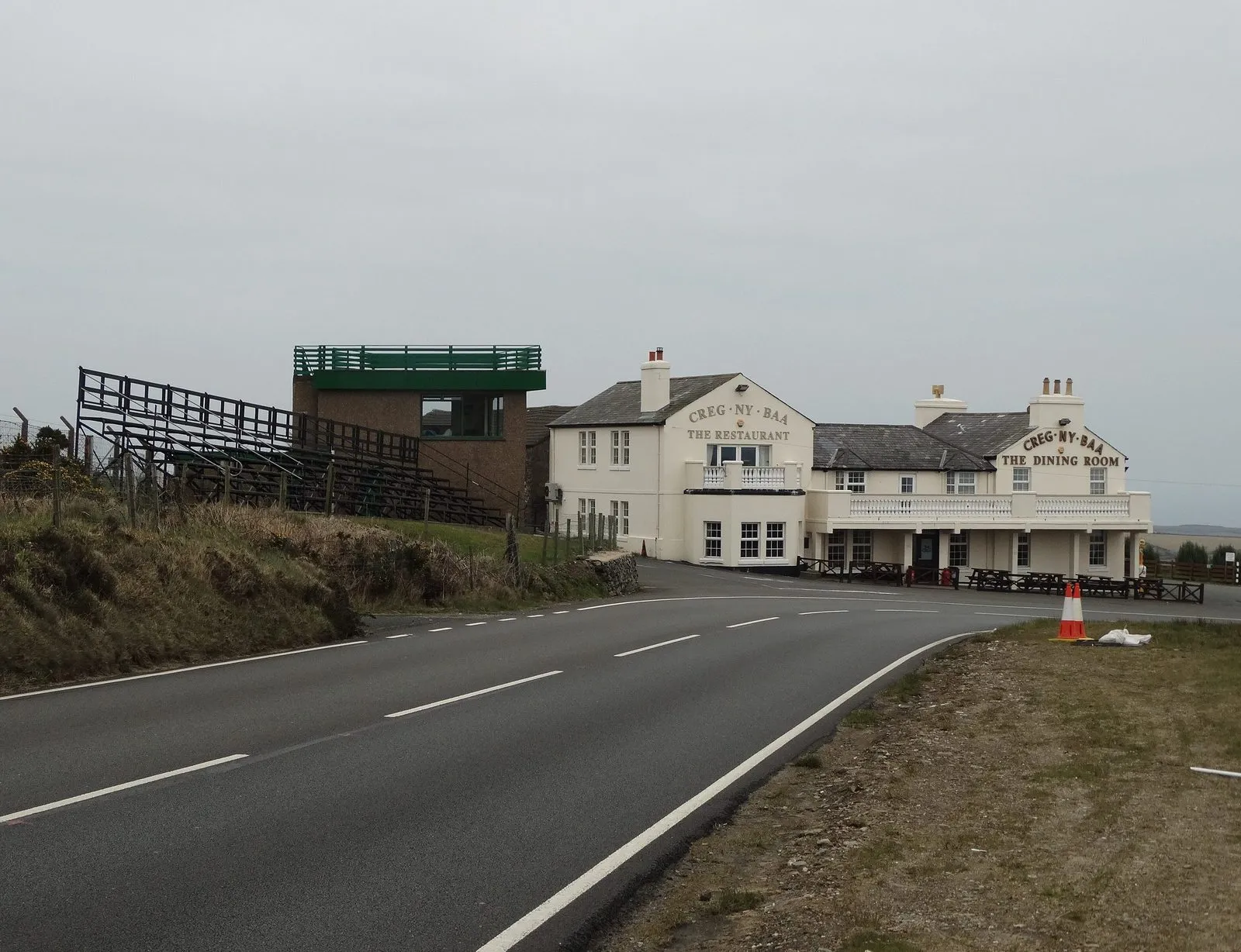
The A18 runs about 13 miles over the hills between Ramsey and Douglas, via the Bungalow and Creg-ny-Baa. It’s part of the TT course and the most famous road on the island. For most of its length it has no speed limit. It’s also open moorland at up to about 1,385 feet, which means:
- Sheep. They graze the open mountain and have access to the road. The police periodically warn drivers (opens in a new tab) when numbers build up.
- Weather. Low cloud can drop visibility to a few car lengths, crosswinds are strong, and in winter the road closes for snow and ice. Check gov.im live road information (opens in a new tab). If it’s closed, go round by the coast road through Laxey.
- Motorbikes. Riders come to ride the course all year, and in May, June and August there are a lot of them. Check your mirrors before you pull out of a lay-by, and don’t brake-test anyone.
- A tram crossing. At the Bungalow the Snaefell Mountain Railway crosses the road on the level. Watch for the lights.
It’s a great drive on a clear day: the views open out over the whole north of the island. Take it at your own pace and pull over to let faster traffic by.
Driving during TT
TT turns the island’s road network inside out for about two weeks in late May and early June. In 2026, per the official road closure information (opens in a new tab):
- The Mountain Road was one-way from Ramsey Hairpin to Creg-ny-Baa, in the direction of the course, from 4.30pm on 22 May until 9.30am on 9 June. You couldn’t drive up the mountain from the Douglas side at all during that time, and cycling on that section was banned.
- The whole TT course closes for practice and racing, typically for most of the day on race days and in the evenings for practice. It is an offence to be on a closed road, and that includes the pavement.
- Crossing the course is only possible at set crossing points, when the Clerk of the Course allows it during an interval. There’s an access road to the inside of the course (including Noble’s Hospital) off the A5 near the Quarterbridge, for vehicles under 3.5 tonnes.
- Temporary speed limits go up on various roads during the festival and are enforced, by police in marked and unmarked vehicles.
The practical upshot: if your accommodation is inside the course, or you need to reach the airport or ferry on a race day, work out your route and timings the day before. The TT schedule and where to watch pages cover the timing.
The August Manx Grand Prix and Classic TT also close the course for practice and racing. In 2026 the Mountain Road stayed two-way during them, though cycling on it was banned. The Southern 100 in July closes roads around Castletown. Check the dates before you plan a drive.
Licences, hire cars and insurance
- Licence. If you’re not resident, you can drive on your current full driving licence for up to 12 months, according to gov.im (opens in a new tab). If your licence has no English translation, carry an International Driving Permit too. Moving here for good? Registering a car and swapping your licence are covered in cars and licences.
- Hire cars. Most firms work from the airport, and at least one has a desk at the Sea Terminal. Visit Isle of Man lists them (opens in a new tab). Around TT, book very early.
- Your own car and insurance. The island isn’t part of the UK (see is the Isle of Man in the UK?), so check with your insurer and breakdown provider that your policy covers the Isle of Man before you sail. Don’t assume it does.
Parking discs
Most towns and villages use free disc parking zones with limits of 30 minutes, an hour or two hours, depending on the street. You need a parking disc on the dashboard showing when you arrived. Discs are free from hire firms, the Sea Terminal, police stations, post offices and local commissioners’ offices, according to Visit Isle of Man (opens in a new tab). Park in a disc zone without one and you’ll get a ticket. Car parks, charges and the free spots are in parking on the Isle of Man.
The rest of the law
- Drink-driving. The Isle of Man Highway Code (opens in a new tab) sets the limit at 35 micrograms of alcohol per 100ml of breath (80mg per 100ml of blood), higher than Scotland’s. Lowering it has been proposed more than once, so the honest advice is not to drink at all if you’re driving.
- Phones. Using a hand-held phone while driving is illegal, including when stopped at lights or in a queue. The police (opens in a new tab) say the fine can be up to £2,500 plus four penalty points.
- Seat belts and child seats. Same principles as the UK: belts in every seat, and suitable child restraints for children.
- Fuel. Road fuel is usually dearer than in the UK (opens in a new tab), partly because it all has to be shipped in. Fill up before the ferry if it’s convenient.
For how driving compares with the bus, trains and taxis, see getting around the Isle of Man.
— The Guru
Common questions
Is there a speed limit on the Isle of Man?
Yes and no. There's no national speed limit, so many roads outside towns, including most of the Mountain Road, have no limit at all. Towns and villages are 30mph unless signed lower (some streets are 20mph), other roads carry signed 40, 50 or 60mph limits, any car showing an R or L plate is capped at 50mph, and a car towing a trailer at 40mph. Careless and dangerous driving laws apply at any speed.
Can I drive on the Isle of Man with a UK licence?
Yes. Visitors can drive on their current full licence for up to 12 months. If your licence has no English translation, carry an International Driving Permit as well.
Can you drive the TT course?
Yes. The TT course is made up of public roads, open to traffic whenever it isn't closed for racing. During TT fortnight the Mountain Road section is one-way, from Ramsey towards Douglas (22 May to 9 June in 2026), and the whole course closes for practice and races.
Do I need a parking disc on the Isle of Man?
Yes, in most towns and villages. Free disc zones limit parking to 30 minutes, one hour or two hours. Discs are free from hire firms, the Sea Terminal, police stations, post offices and local commissioners' offices.