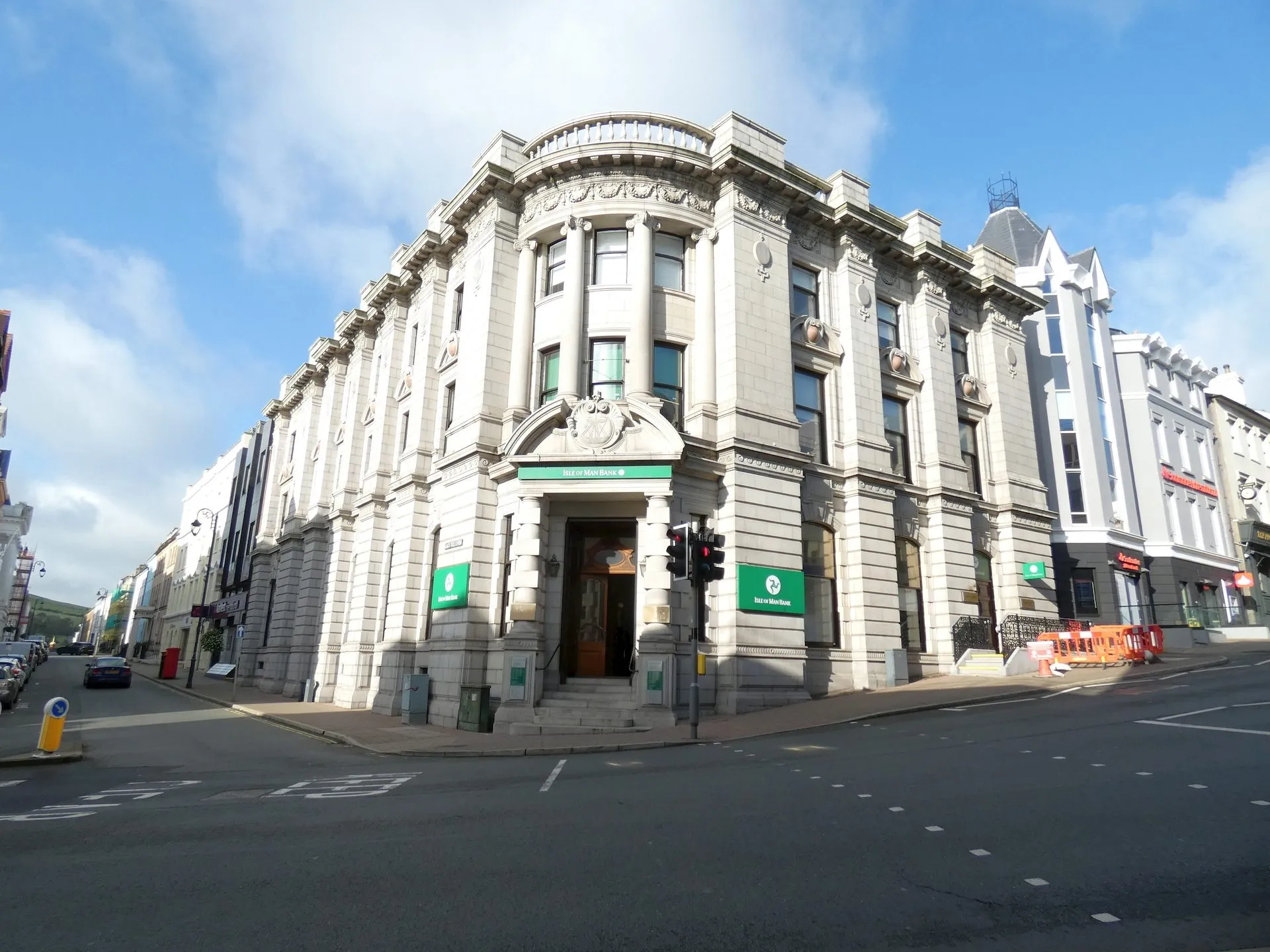
Photo: Gerald England / Wikimedia Commons, CC BY-SA 2.0
Manx money — the Isle of Man pound, and why you should spend it before you leave
Photo: Gerald England / Wikimedia Commons, CC BY-SA 2.0
Last checked
The Manx pound is worth the same as sterling, but it won't work in UK shops. Notes, coins, cards, cash machines, and how not to go home with a wallet of it.
The Isle of Man has its own money. It’s still pounds and pence, and it’s worth exactly the same as the money in your pocket, but the notes and coins look different and they only work on the island. This page covers what you’ll be handed, what you can pay with, and how not to get stuck with Manx notes at Heysham.
If you’re wondering why an island in the British Isles prints its own money, it’s because it isn’t part of the UK. See is the Isle of Man part of the UK?
What Manx money is
The Manx pound is issued by the Isle of Man Government. It’s worth exactly the same as a UK pound, with no exchange rate and no commission. The Isle of Man Government (opens in a new tab) says it’s “equivalent in value to its United Kingdom counterpart”, and in the same breath that it “can not be spent outside of the Isle of Man”.
It works both ways on the island. UK notes and coins are legal tender here, so you can pay in Bank of England notes and nobody will blink (Visit Isle of Man (opens in a new tab)). The trouble is the change. A shop will give you back whatever’s in the till, and that’s mostly Manx.
The notes
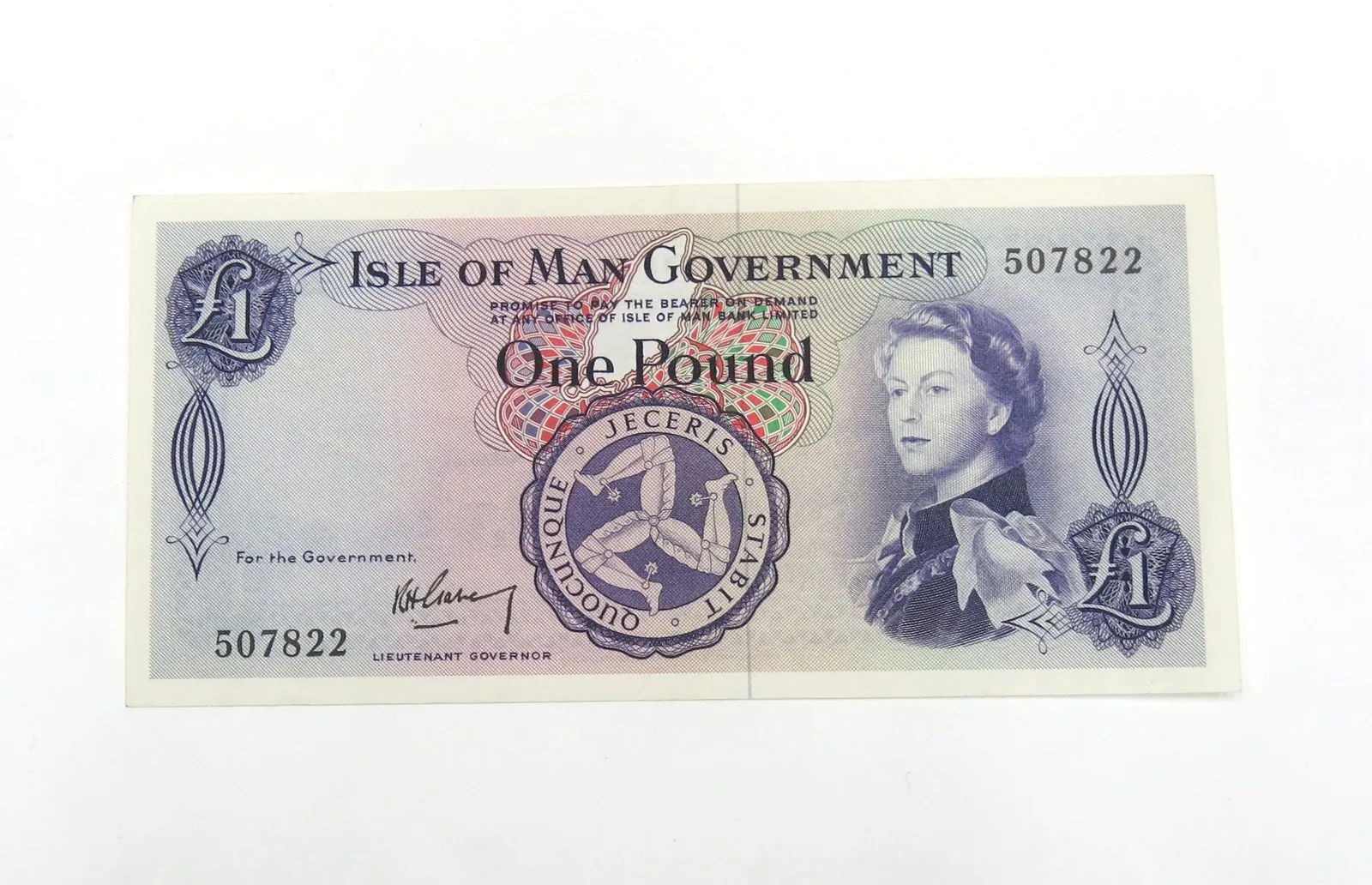
Manx notes come in the same values as UK ones, plus a £1 note. The front of each one shows Queen Elizabeth II (without a crown) and the three legs of Man. The back shows a Manx landmark:
| Note | On the back |
|---|---|
| £1 | Tynwald Hill, St John’s |
| £5 | Castle Rushen, Castletown |
| £10 | Peel Castle |
| £20 | The Laxey Wheel |
| £50 | Douglas Bay |
They’re printed on paper, not polymer. The Treasury’s Know Your Notes leaflet (opens in a new tab) shows the security features: a three-legs watermark, a metal thread and raised print.
The £1 note
The £1 note is still issued and still in circulation. Most visitors haven’t held one since the 1980s, so it’s the one people keep as a souvenir. That’s fine: keeping one costs you exactly a pound. The old plastic (Tyvek) £1 notes, along with the 50p and ten-shilling notes, stopped being legal tender after 31 October 2013, although the Isle of Man Bank will still honour them at face value (Treasury notice (opens in a new tab)).
New notes are on the way, eventually
Since the change of monarch, the Treasury has been redesigning the notes. After a 2023 public consultation it said the work would take 18 months to two years, and that details of the release would come “in due course” (consultation outcome (opens in a new tab)). As of September 2026 we haven’t found an announced release date. The current notes remain valid.
The coins
Manx coins come in the same sizes and values as UK coins, from 1p to £2. The newer ones carry King Charles III on the front, and there are regular commemorative designs, including TT and wildlife themes, so check your change before you spend it.
Small coppers are slowly disappearing. The Treasury has stopped minting 1p and 2p coins, and in November 2023 it told businesses to plan for rounding cash prices to the nearest 5p voluntarily once there aren’t enough coppers left (gov.im (opens in a new tab)). If a café rounds your bill, that’s why.
Paying by card
Cards work as they do at home. Visa, Mastercard and American Express are widely accepted (Visit Isle of Man (opens in a new tab)), and contactless is normal in shops, pubs and cafés. You can pay on buses by contactless card or phone too, so you don’t need cash for those either.
Payments are in pounds, so there’s no currency conversion to worry about. For what things actually cost once you’re here, see our Isle of Man budget guide.
Cash machines
There are cash machines in all the main towns (Visit Isle of Man (opens in a new tab)). The island is on the UK’s LINK network, so a UK debit card works the same way it does at home: most withdrawals are free, but a machine that charges has to tell you on screen before you confirm.
One quirk worth knowing: cash machines give out Manx notes, except the ones at the Sea Terminal in Douglas and at the airport, which give English notes. If you want cash to take home, get it there.
Bank opening hours are generally 9.30am to 4.30pm on weekdays. Remember the island has two extra bank holidays, TT Bank Holiday and Tynwald Day, when banks are shut.

Taking Manx money home
This is the one that catches people out. Manx notes and coins aren’t legal tender in the UK, and UK shops don’t have to take them, so in practice they won’t. Your options, best first:
- Spend it on the island. Pay the last few bills in cash, starting with the Manx notes, and keep your UK notes for the journey home.
- Ask for UK notes in your change on your last day. Some shops will have Bank of England notes in the till and will swap them if you ask, but they don’t have to.
- Use the cash machines at the Sea Terminal or airport for any cash you need to take home, as they give out English notes.
- Change it back in the UK. Visit Isle of Man says Manx notes “can be exchanged at UK banks”, but check with your own bank before you rely on that. Some leftover-currency firms buy Manx notes by post, so check the rate they’ll give you first.
Coins are harder to get rid of than notes, so spend those first.
— The Guru
Common questions
Can you use Manx money in the UK?
Not in shops. Manx notes and coins are not legal tender in the UK and businesses don't have to take them. Spend them on the island, or ask your bank whether it will exchange them.
Can you use English money on the Isle of Man?
Yes. UK notes and coins are legal tender on the island and UK debit and credit cards work as normal. Your change will usually be in Manx money.
Is the Manx pound worth the same as the British pound?
Yes, always. One Manx pound equals one pound sterling, so there is no exchange rate and nothing to convert.
Does the Isle of Man still have £1 notes?
Yes. The Isle of Man Government still issues a £1 note, showing Tynwald Hill on the back, and it is in everyday circulation.