Photo: Bahnfrend / Wikimedia Commons, CC BY-SA 4.0
Isle of Man towns — which are worth your time, and who each one suits
Photo: Bahnfrend / Wikimedia Commons, CC BY-SA 4.0
Last checked
Douglas, Peel, Ramsey, Castletown, Port Erin, Port St Mary, Laxey and St John's compared. What each town is like, who it suits, and an honest verdict on every one.
On the map
- Douglas — The capital, ferry port and transport hub. Absorbs Onchan
- Peel — Castle, harbour, kippers and the sunsets. The favourite
- Ramsey — The quiet northern town at the end of the Manx Electric
- Castletown — The old capital, with Castle Rushen in the middle
- Port Erin — Sandy bay under Bradda Head, end of the steam railway
- Port St Mary — Harbour village and the start of the best cliff walking
- Laxey — The Great Wheel and the tram up Snaefell
- St John's — Tynwald Hill and Tynwald Mills
- Onchan — Douglas's big neighbour. Groudle Glen is here
- Kirk Michael — West-coast village on the TT course
- Ballasalla — Rushen Abbey and Silverdale Glen, by the airport
- Sulby — Gateway to Sulby Glen and the TT's fastest straight
- Maughold — Old churchyard, Manx crosses and the headland
- Ballaugh — The TT's jumping bridge and the Curraghs
- Andreas — Flat northern farmland and a wartime RAF airfield
- Bride — Last village before the Point of Ayre
- Foxdale — Old mining village in the middle of the island
- Glen Maye — A waterfall glen down to the sea, south of Peel
- Colby — Quiet southern village between Castletown and Port Erin
The Isle of Man is about 32 miles long, and none of its towns is much more than an hour from any other. So you’re not choosing one to see. You’re choosing where to spend your evenings and what to fit into a day. This page is the quick comparison: a verdict on every town, who each one suits, and a map. Each town has its own full guide, with where to stay, eat and park. The smaller places have their own page, the villages.
If what you actually want to know is where to sleep, start with where to stay. This page is about the places themselves.
Every town, compared
| Town | Best for | Verdict |
|---|---|---|
| Douglas | No car, first visits, eating out | The practical base. Sleep here, spend your days elsewhere |
| Peel | Everyone, especially couples | The favourite. The most likeable town on the island |
| Castletown | History, short fly-in breaks | The best-kept old town. Quiet at night |
| Port Erin | Families, beaches, trains | The best beach town, and the steam railway ends here |
| Port St Mary | Walkers, sailors, early nights | Small, quiet, and the start of the best cliff walks |
| Ramsey | The quiet north, families at Mooragh Park | Worth the tram ride. A long way from the south |
| Laxey | A day out, the Wheel and Snaefell | The best day out on the east coast. Thin in the evenings |
| St John’s | Tynwald Day, the middle of the island | A village with one big day a year. Pass through |
| The villages | Walkers, cottages, TT spectators | Kirk Michael, Ballasalla, Sulby, Maughold and the rest |
The towns
Douglas, and Onchan
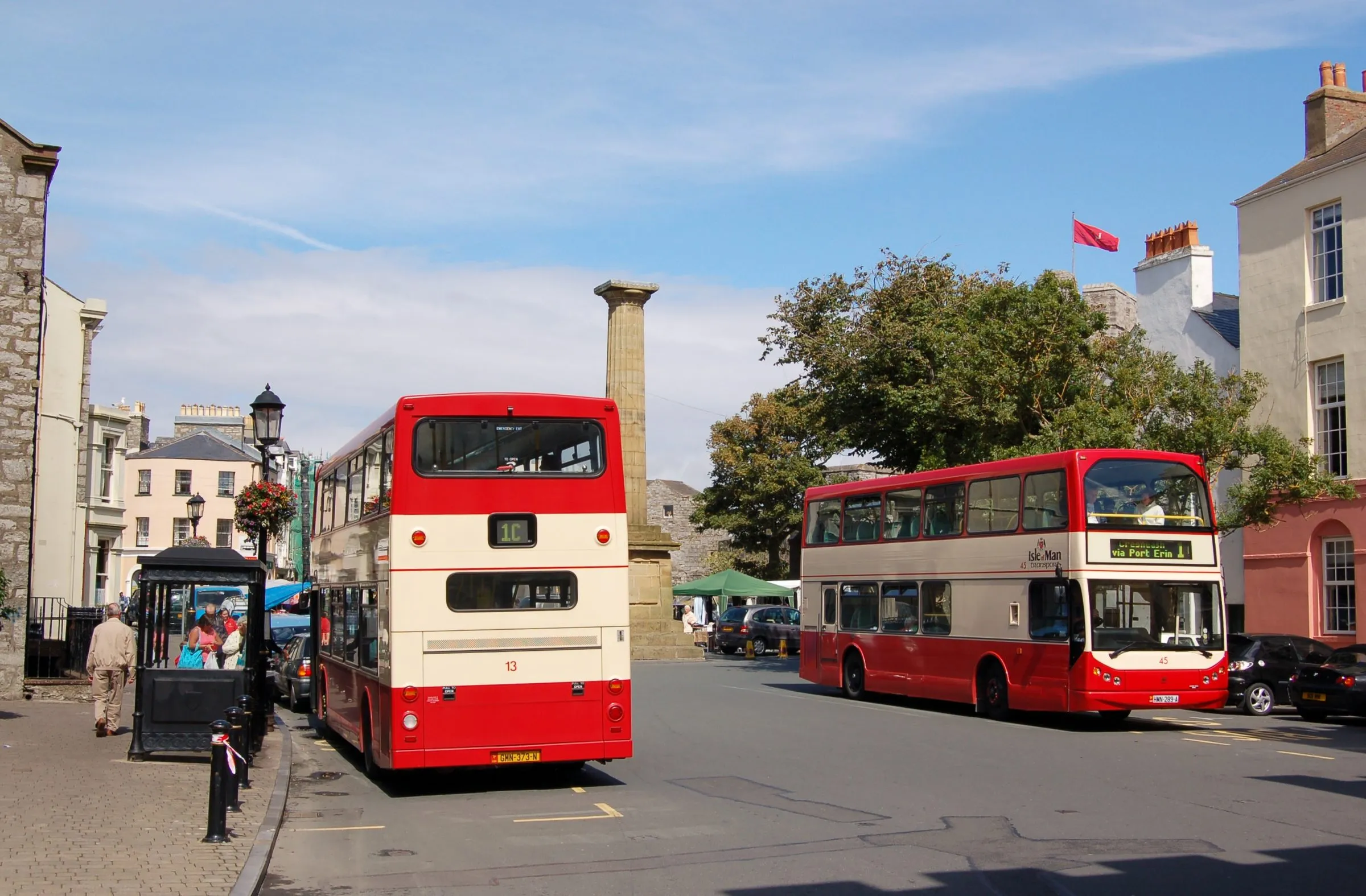
The capital, the ferry port and home to about a third of the island’s people. It has a two-mile Victorian promenade, most of the hotels, the only real nightlife, and the start of every bus route and both main railways. It isn’t the prettiest place on the island, and parts of the front feel tired. Onchan runs on from the north end of the promenade with no visible join. It’s a big residential village with Groudle Glen at its edge.
Verdict: the best base without a car, and the only town with real choice after 8pm. Douglas and Onchan guide.
Peel
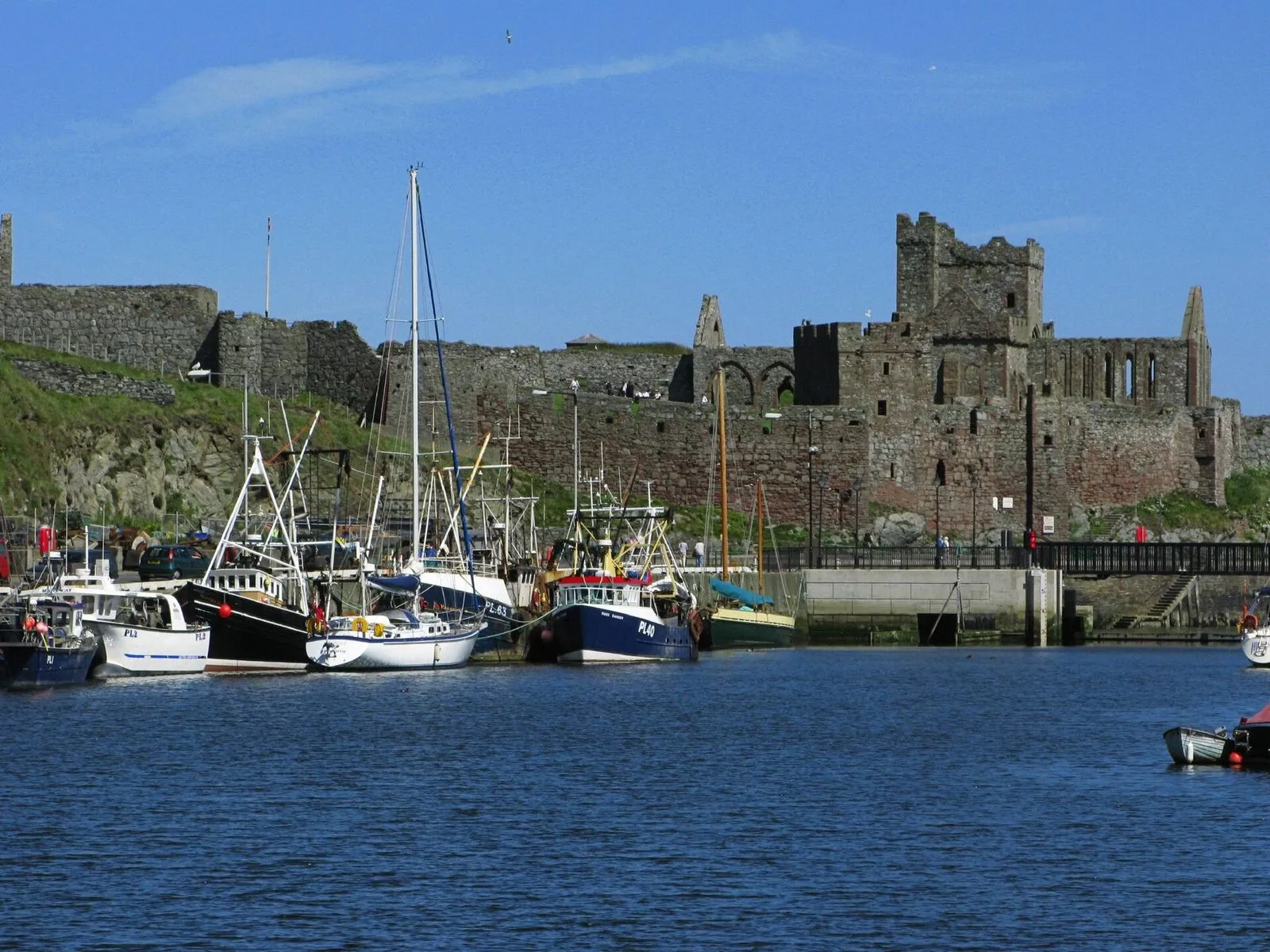
The west-coast fishing town: a ruined castle on St Patrick’s Isle, a working harbour, kipper smokehouses, a sandy beach and the sunsets. About 5,700 people live here (2021 census). It has no railway, but buses run from Douglas.
Verdict: if you only see one town outside Douglas, make it this one. Peel guide.
Castletown
The island’s capital until the 1860s, and it still looks the part. Castle Rushen stands in the middle of the town, with a small harbour, the Old House of Keys and a square of Georgian houses around it. It’s on the steam railway and five minutes from the airport.
Verdict: the handsomest town centre on the island. A half-day for most people, and a good base for a quiet fly-in weekend. Castletown guide.
Port Erin
A sandy beach in a sheltered bay, with Bradda Head above it and the steam railway from Douglas ending at the top of the village. Busy in summer, very quiet in winter.
Verdict: the best base for families and for the south-west coast. Port Erin guide.
Port St Mary
Port Erin’s quieter neighbour over the hill. It has a working harbour and a small beach, and it’s the start of the cliff walk past the Chasms towards the Calf of Man. It’s on the steam railway too.
Verdict: for walkers and anyone who wants a harbour, a pub and an early night. Port St Mary guide.
Ramsey
The biggest town after Douglas, in the flat, empty north, at the end of the Manx Electric Railway. It has a long beach, Mooragh Park, a Victorian pier under slow restoration and Milntown’s gardens on the edge of town. Parking is free.
Verdict: worth the tram ride for the day. Stay if you want the quiet half of the island and don’t mind the drive south. Ramsey guide.
Laxey
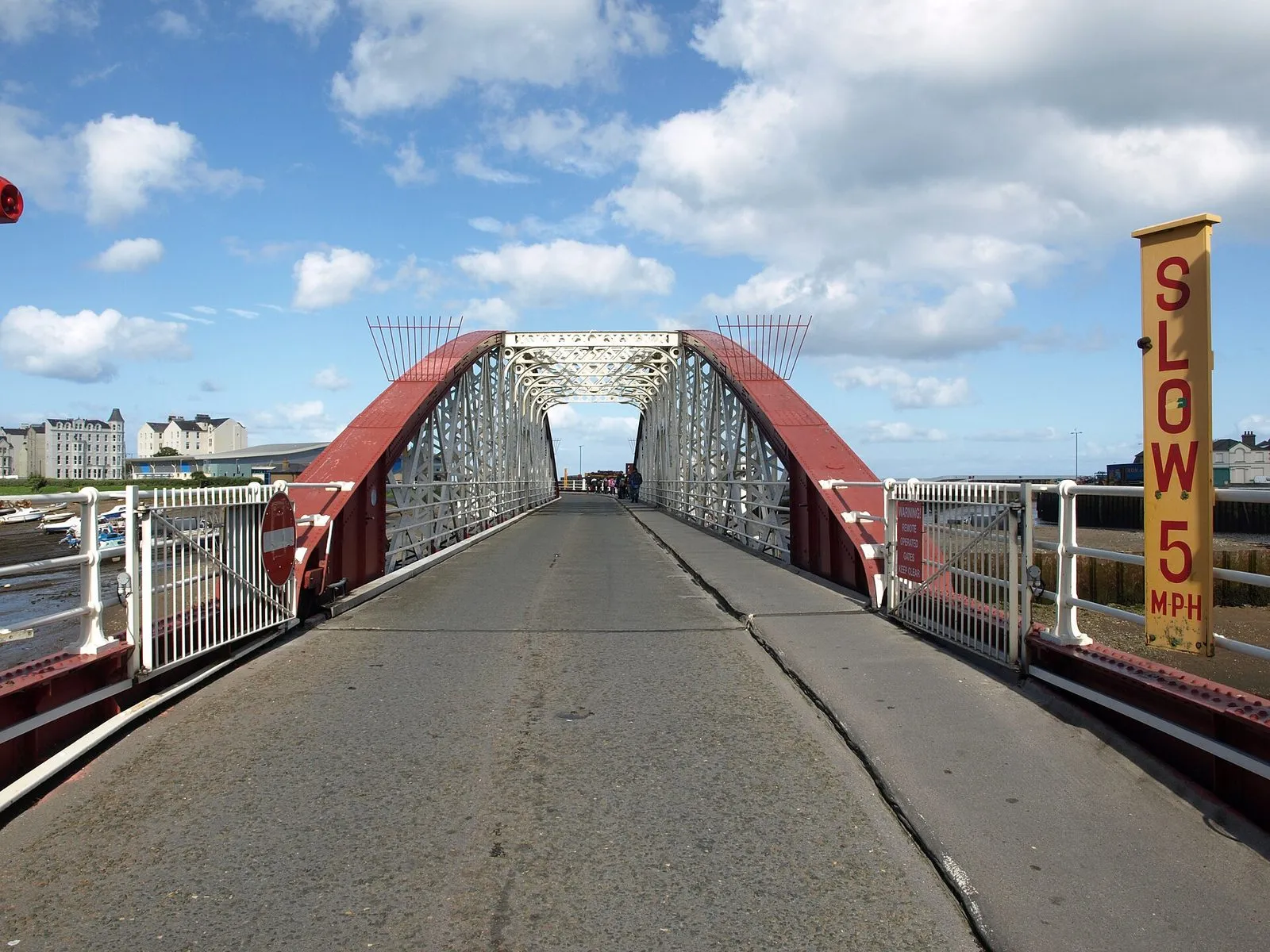
A village rather than a town. It has the Great Laxey Wheel, the only railway up Snaefell, a small harbour and a stony beach, all on the Manx Electric Railway half an hour from Douglas.
Verdict: the best day out on the east coast, and a good place for a cottage with a car. Laxey guide.
St John’s
A small village in the middle of the island, home to Tynwald Hill, where the island’s parliament meets in the open air every Tynwald Day, and to the Tynwald Mills shops.
Verdict: go on 5 July, or stop on the way to Peel. St John’s guide.
The villages
Kirk Michael and Ballaugh on the TT course, Ballasalla by the airport and Rushen Abbey, Sulby at the foot of its glen, Maughold on its headland, and the flat farmland round Andreas and Bride. Most of them have a pub, a church and not much else, and that’s the appeal. The villages guide.
Seeing several towns without a car
The island’s railways join up the towns better than you’d expect. The steam railway runs Douglas – Castletown – Port St Mary – Port Erin. The Manx Electric runs Douglas – Onchan – Laxey – Ramsey. Buses fill the gaps, including Peel and St John’s, and run all year. See getting around and the Go Explore card, or the full guide to the island without a car.
A sensible split: one day south by steam (Castletown and Port Erin), one day north by tram (Laxey and Ramsey), and one day west by bus (St John’s and Peel, for the sunset).
Every Places guide
- Douglas, Isle of Man — the capital, honestly, plus Onchan next doorDouglas is where the ferry lands and most beds are. What the capital is really like, where to stay and eat, how parking works, and the bits of Onchan worth the walk.
- Peel — the west coast fishing town with a castle, a beach and the sunsetsPeel has a castle on an island, a working harbour, a sandy beach and the island's best sunsets. What to do, where to stay and eat, parking and buses.
- Port Erin — the best beach on the Isle of Man, and the end of the lineA sheltered sandy bay, the steam railway terminus and the walk up Bradda Head. What to do in Port Erin, where to stay and eat, parking and getting there.
- Port St Mary — the quiet harbour on the other side of the hillPort St Mary is a working harbour a mile from Port Erin, with Chapel Bay beach and the cliff walk to the Chasms. What to do, where to stay and eat, parking.
- Castletown — the old capital, and the island's best castleCastletown was the Manx capital for centuries and still looks it. Castle Rushen, the Old House of Keys, where to eat, where to park and how to get there.
- Ramsey — the island's northern town, and the quiet end of the Isle of ManRamsey is the island's biggest town after Douglas: a long beach, a Victorian pier coming back to life, Mooragh Park, free parking and far fewer visitors than the south.
- Laxey — the Great Wheel, the tram up Snaefell and a beach at the bottom of the glenLaxey has the Great Wheel, the only railway up Snaefell and a quiet harbour beach. What to do, where to eat, stay and park, and how to get there without a car.
- St Johns — Tynwald Hill, Tynwald Mills and the crossroads of the islandSt Johns is where Tynwald meets outdoors each July. The rest of the year it's a quiet village with the Tynwald Mills shopping stop. What to see, eat, park.
- Isle of Man villages — which are worth stopping in, and which to drive throughKirk Michael, Ballasalla, Sulby, Maughold, Bride, Foxdale and the rest. What's in each Isle of Man village, whether it's worth stopping, and where to eat.
— The Guru
Common questions
What is the capital of the Isle of Man?
Douglas. It took over from Castletown in the 1860s, when Tynwald and the government moved there, and it was made a city in the 2022 Jubilee civic honours. About 27,000 people live there, roughly a third of the island.
How many towns are there on the Isle of Man?
Officially there's one city (Douglas) and three towns (Ramsey, Peel and Castletown). Everywhere else, including Port Erin, Port St Mary, Laxey and Onchan, is officially a village, though Onchan has more people than any of the towns.
What is the prettiest town on the Isle of Man?
Peel, for most people. It has a castle on an island, a working harbour, a sandy beach and narrow old streets, all within a ten-minute walk. Castletown is the close second, with the best-preserved old centre on the island.
How far apart are the towns on the Isle of Man?
Not far. The island is about 32 miles long, Douglas to Peel is about 11 miles and Douglas to Ramsey about 16. The longest trip between towns, Ramsey to Port Erin, is about an hour by car and longer by bus.