Photo: James Qualtrough / Unsplash
Cregneash — the folk village at the end of the island, and the walks from it
Photo: James Qualtrough / Unsplash
Last checked
Cregneash in 2026 — what's in the folk village, ticket prices, opening season, crafts and animals, getting there by bus, and the walks to the Sound and Spanish Head.
On the map
- Cregneash — Free car park just before the village on the A31
- Meayll Hill — Neolithic Meayll Circle and the path over to Port Erin
- Spanish Head — Cliffs at the island's south-west tip, about a mile's walk
- Port Erin station — Steam Railway terminus, about 1.5 miles below the village
Cregneash is a crofting village on the hill above the Calf of Man, at the far south-west tip of the island, kept as it was a century and more ago. Manx National Heritage (MNH) runs it as a living folk museum. This page covers what’s there, tickets, when it’s open, the crafts and animals, getting there without a car, and the walks that make it worth the trip. For the other MNH sites and whether a pass pays, see our heritage guide.
What it is
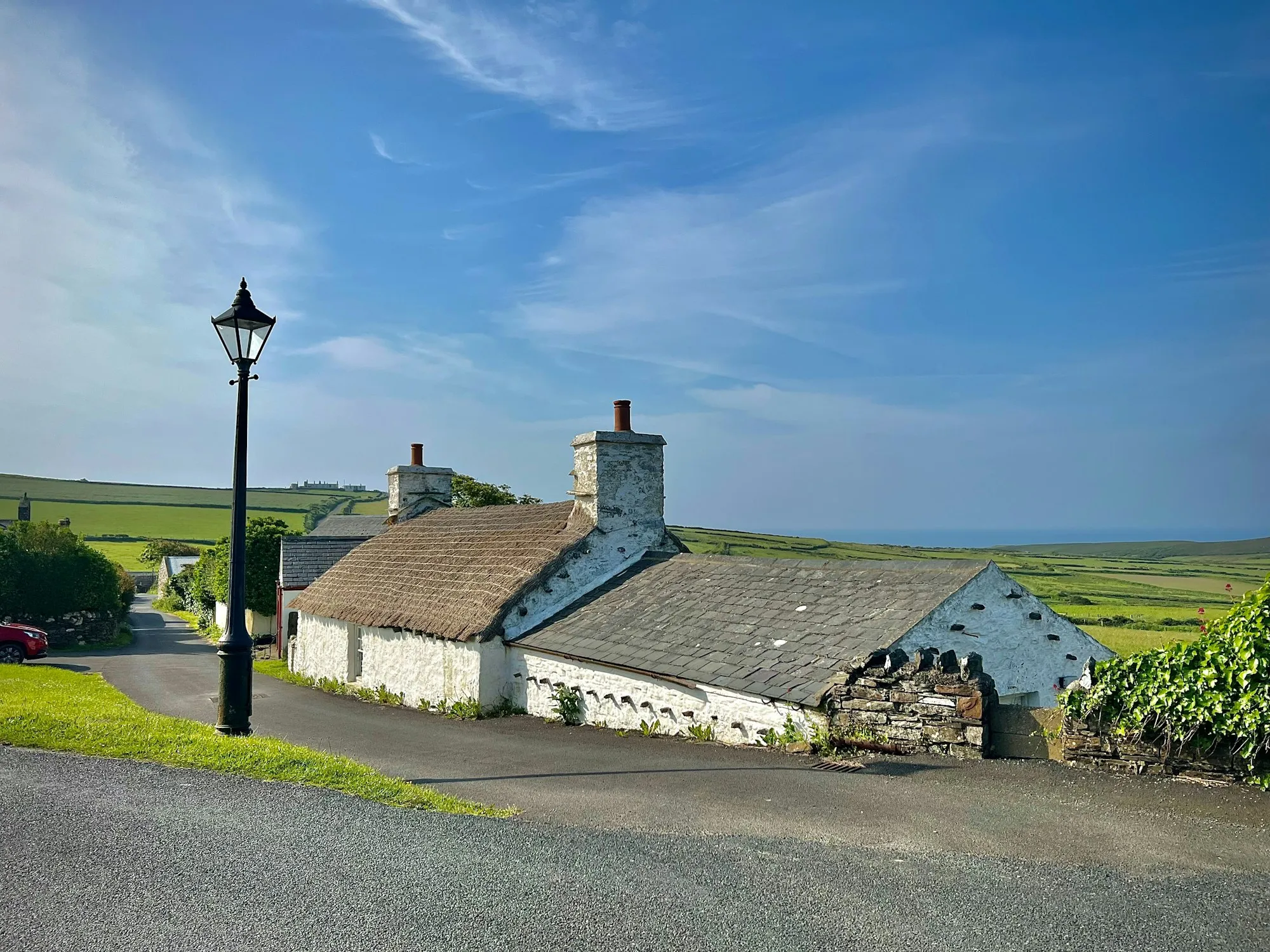
When the old way of life in Cregneash began to disappear in the 1930s, the cottages were kept rather than cleared. Harry Kelly’s cottage opened to the public in 1938, which is why MNH calls Cregneash the oldest open-air folk museum in the British Isles.
The village also matters for the Manx language. Two of the last native speakers, Ned Maddrell and Edward Faragher (Ned Beg Hom Ruy), came from here. In 1947 the Irish leader Éamon de Valera visited Maddrell and they talked, him in Irish and Maddrell in Manx.
Film fans may recognise it too: Waking Ned Devine and Mindhorn were both shot here.
What’s there
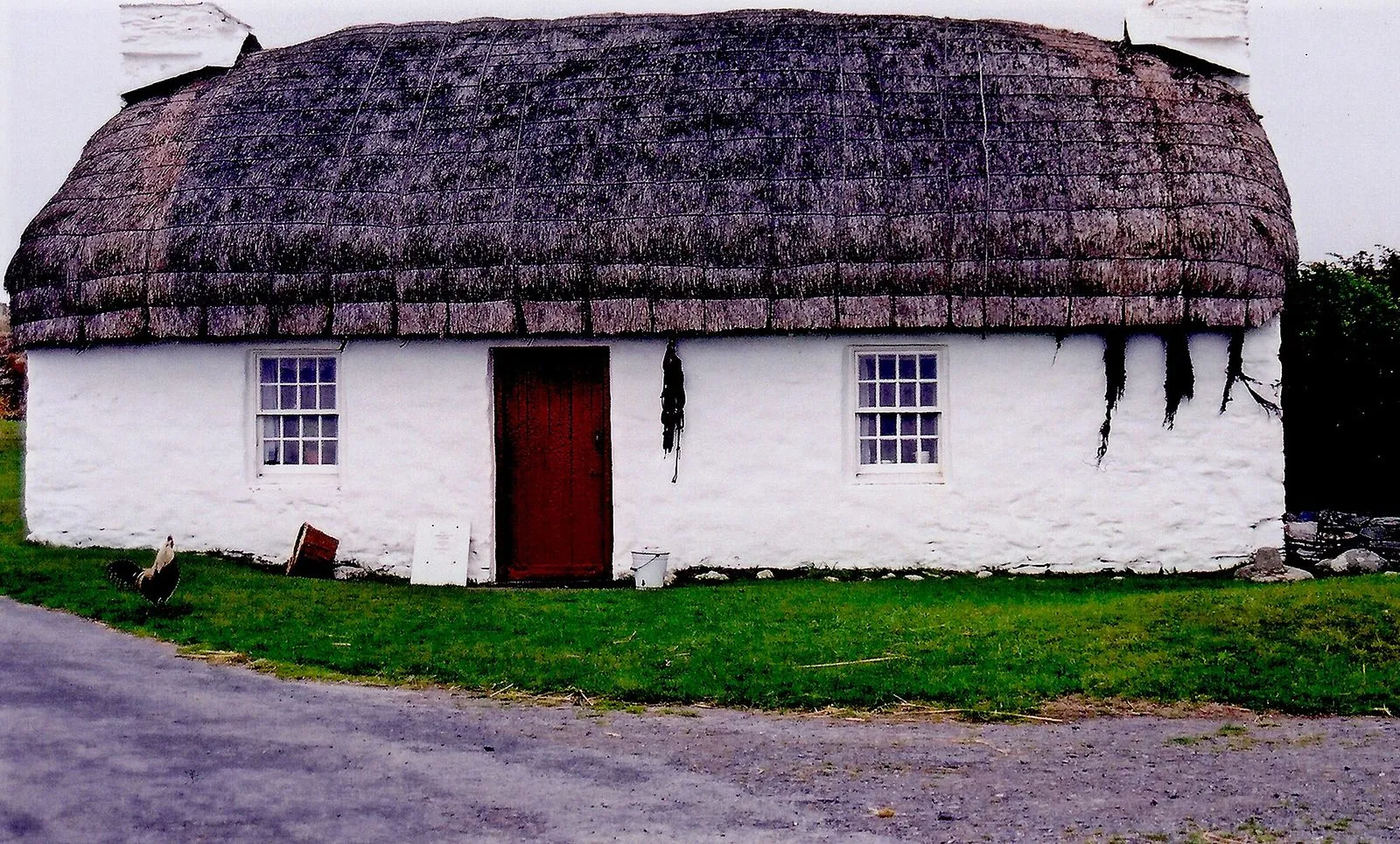
A cluster of whitewashed, mostly thatched cottages along a single lane, with fields and hill all round. Several are open to walk into:
- Harry Kelly’s cottage. A crofter’s home furnished as it was, where weaving and knitting happened in the living room.
- Ned Beg’s cottage, named after Edward Faragher.
- The smithy, near the entrance, with a carpenter’s workshop attached.
- The Farm House, where staff in traditional dress demonstrate weaving, knitting and other crafts.
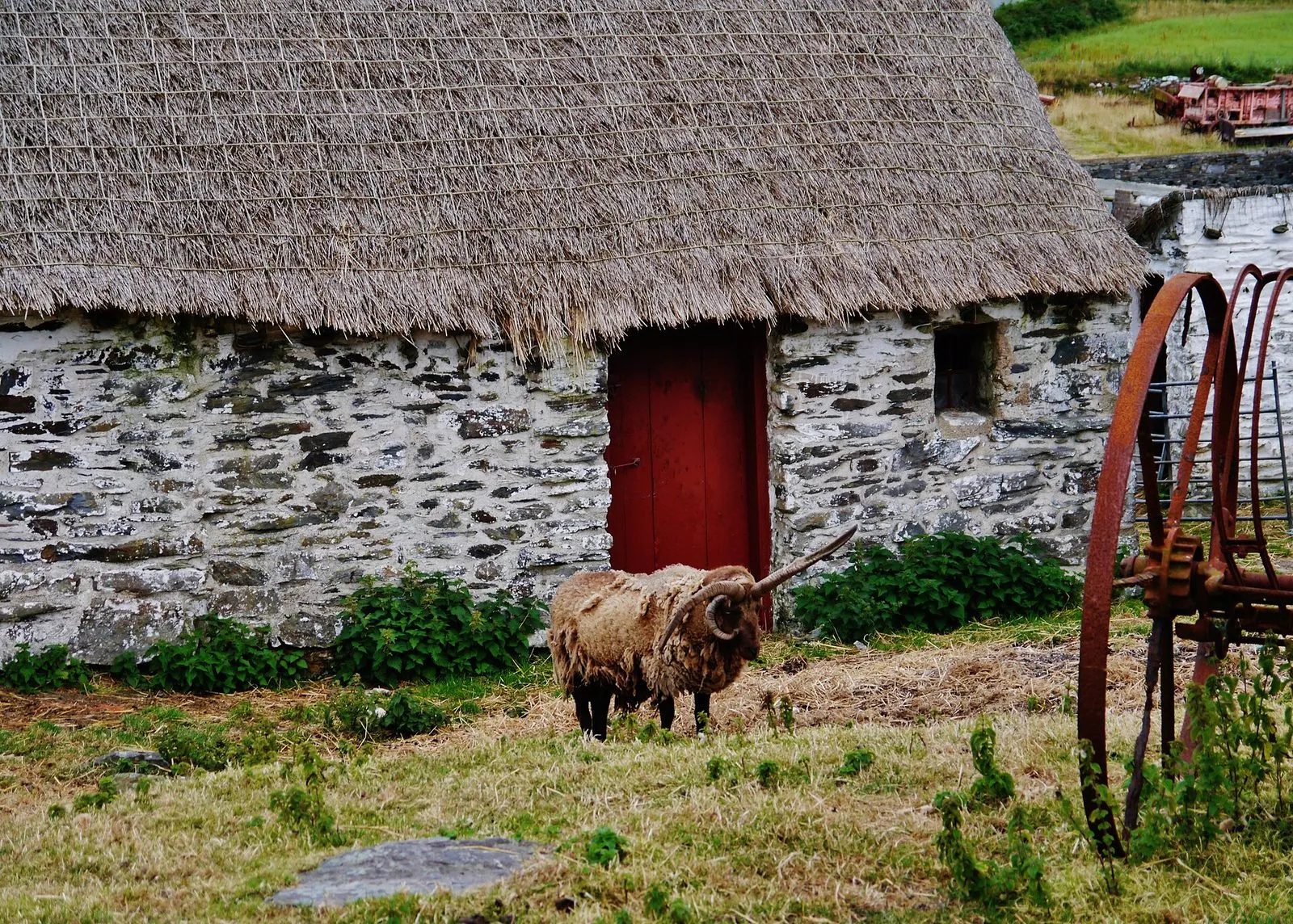
- The farm and fields, with four-horned Loaghtan sheep (the native Manx breed), shorthorn cattle and, according to MNH, tailless Manx cats.
There’s also a picnic area with dark-sky interpretation boards. Cregneash has some of the darkest skies on the island. See our dark skies guide.
Demonstrations depend on who’s working that day. If watching the smith or the weaver matters to you, ring the village first on 01624 834993.
Tickets and opening times
Checked on MNH’s Cregneash page (opens in a new tab) in September 2026.
| Ticket | Price (September 2026) |
|---|---|
| Adult | £14, plus an optional £1.50 donation |
| Student (18+ with card) | £7 |
| Children 16 and under | Free with an adult |
| 7-day Heritage Pass | £35, covers every MNH site |
The village is open daily from 27 March to 1 November 2026, 10am to 4.30pm, and last entry is at 4pm. National Trust and English Heritage members get in free.
Cregneash is one of the four big MNH sites, with Castle Rushen, the Laxey Wheel and Peel Castle. If it’s your third paid site this week, the 7-day pass is cheaper than paying on the door.
Food
The Creg y Shee tea rooms, in the middle of the village, are run by MNH. They serve home-made broth and soup, salads and afternoon tea with cakes, including bonnag, the Manx fruit bread. MNH doesn’t publish the tea rooms’ hours on its page, so don’t assume they’re open outside museum hours.
Down at the Sound, a mile below the village, the Sound Café has big windows facing the Calf. Our Calf of Man guide has its 2026 hours.
Walks from Cregneash
This is what turns an hour’s museum into a proper day. Wear boots: the paths are rough and the headlands are high.
- The Sound. About a mile downhill on the road or the path, to the island’s southern tip. Grey seals haul out on the rocks across the tide race, and the café and visitor centre look straight at the Calf of Man and Kitterland. See our Calf of Man guide for the boat trips.
- Spanish Head. The high cliffs at the south-west tip, about a mile from the village. The coastal path carries on east past the Chasms, deep clefts in the cliff top, towards Port St Mary. Keep children and dogs well back from the edges.
- Meayll Hill and Port Erin. Above the village is the Meayll Circle, a Neolithic burial site that’s free and usually empty. The path over Mull Hill drops down into Port Erin, so you can walk one way and catch the bus back.
All three are sections of the island’s coastal path. See our Raad ny Foillan guide for the rest of it.
Getting there
By car
Cregneash is on the A31 above Port Erin, and the postcode is IM9 5PX. Visit Isle of Man lists a free car park on the right just before the village, with disabled spaces and coach parking. The lanes are narrow, with passing places, so take it slowly.
By bus
MNH lists routes 8 and 8S, which stop at the village. Route 8S started in August 2025 and restored buses to Cregneash and the Sound after they lost their direct service in 2024. It runs from Peel via St John’s, Foxdale, the airport, Castletown, Port Erin and Port St Mary, according to gov.im (opens in a new tab). It’s the only bus that serves the Sound, so check the timetable (opens in a new tab) before you rely on one to get back up the hill. There’s more in our bus guide.
By steam train
Take the Steam Railway to Port Erin, then either catch the bus up or walk about a mile and a half uphill. A Go Explore card covers both the train and the bus.
Dogs and access
Visit Isle of Man lists Cregneash as dog-friendly (more in our dog-friendly guide). It’s a working farm with sheep in the fields, so keep dogs on a lead. The site has level or ramped access, accessible toilets and baby changing. The cottages themselves are historic buildings, so read MNH’s access guide on the Cregneash page if anyone in your group has limited mobility, and see accessible Isle of Man.
— The Guru
Common questions
How long do you need at Cregneash?
An hour to an hour and a half covers the cottages, the animals and the tearoom. Add the walk down to the Sound, or out to Spanish Head, and it becomes a comfortable half day.
Do people still live in Cregneash?
Yes. It's a working village as well as a museum. Manx National Heritage runs most of the buildings, but some of the cottages are private homes, kept looking the part from outside.
How do you get to Cregneash without a car?
Take bus 8 or 8S, which stop at the village and link it with Port Erin, Port St Mary, Castletown, the airport and Peel. Or take the Steam Railway to Port Erin and walk about a mile and a half uphill. Some 8S journeys continue to the Sound.
Is Cregneash open in winter?
The museum isn't. The cottages, farm and tearoom open daily from late March to the start of November (27 March to 1 November in 2026). Out of season you can still walk up the village lane, which is a public road, but the doors are shut.