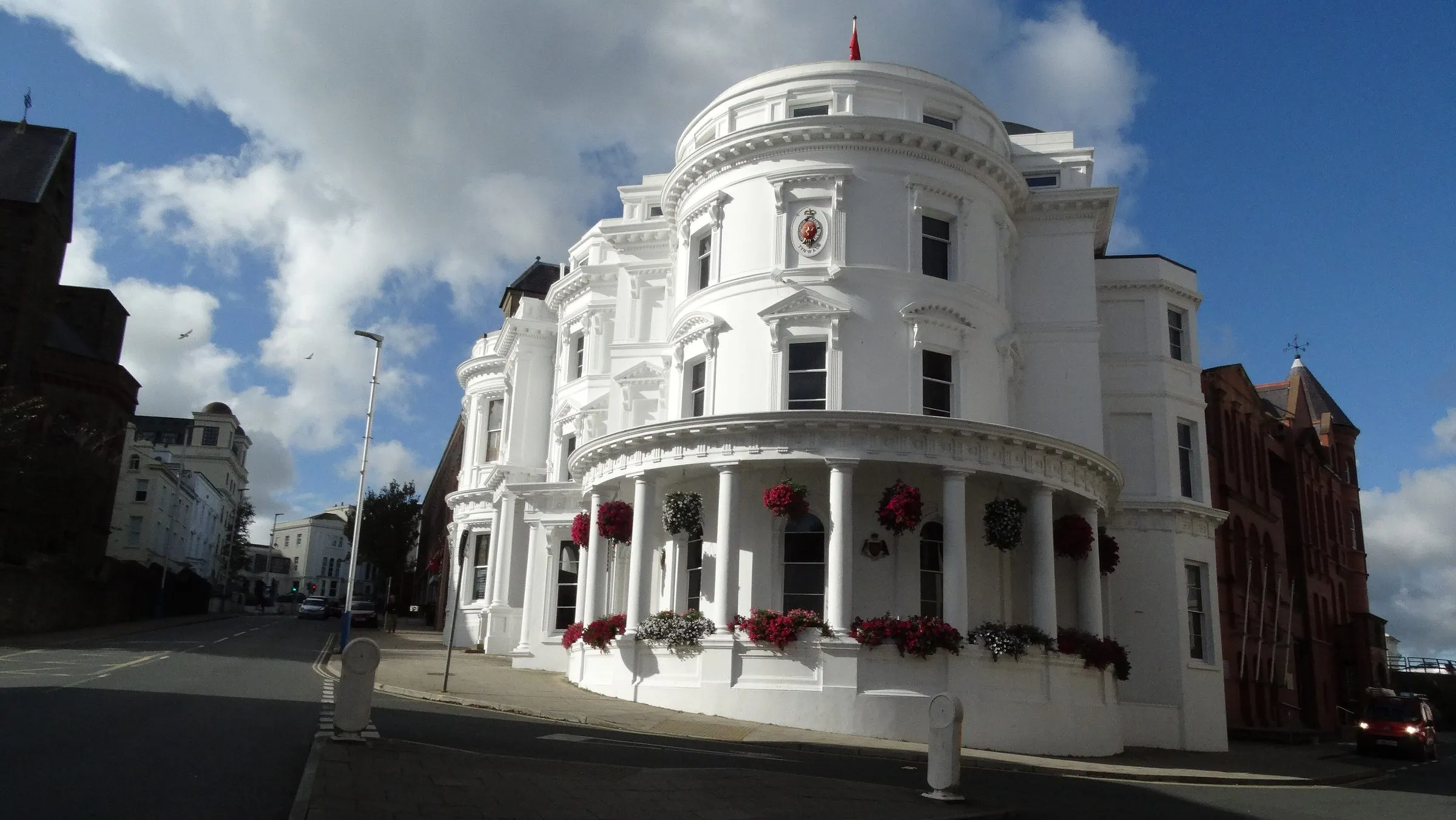
Photo: Colin Park / Wikimedia Commons, CC BY-SA 2.0
Isle of Man income tax — 2026/27 rates, allowances, the tax cap and National Insurance
Photo: Colin Park / Wikimedia Commons, CC BY-SA 2.0
Last checked
Isle of Man income tax for 2026/27 from gov.im — the £17,000 allowance, 10% and 21% rates, the £220,000 cap, National Insurance, VAT, rates and how to register.
The Isle of Man’s tax reputation comes from two numbers: a top rate of 21% and a cap on the whole bill. Both are real. What the brochures leave out is National Insurance, which is higher here than in England. This page sets out the 2026/27 figures from gov.im, works through what a typical salary actually pays, and covers the other taxes a resident meets: NI, VAT, property rates and the ones that don’t exist. It’s written for people living here or about to move.
All income tax figures are from the Treasury’s Budget 2026 practice note, PN 227/26 (opens in a new tab) and the Income Tax Division’s rates and allowances page (opens in a new tab), checked in September 2026.
Income tax rates and allowances for 2026/27
The Manx tax year runs, like the UK’s, from 6 April to 5 April. For the year that started on 6 April 2026:
| 2026/27 | 2025/26 | |
|---|---|---|
| Personal allowance, single | £17,000 | £14,750 |
| Personal allowance, jointly assessed couple | £34,000 | £29,500 |
| Lower rate | 10% on the first £6,500 (£13,000 couple) | Same |
| Higher rate | 21% on the rest | Same |
| Non-resident rate | 21% on all Manx income | Same |
| Tax cap | £220,000 (£440,000 couple) | Same |
Put simply, a single person pays nothing on the first £17,000, 10% on the next £6,500, and 21% on everything over £23,500. There’s no 40% band and no 45% band. The allowance goes down by £1 for every £2 of income over £100,000 (£200,000 for a couple), which is the same trap the UK sets.
Other allowances for 2026/27, from the same two sources:
- Additional personal allowance (single parents): £6,400.
- Blind or disabled person’s allowance: £2,900 each.
- Mortgage or loan interest relief: up to £5,000 of interest.
- Private medical insurance: up to £1,800 of premiums.
- Nursing expenses: up to £15,000, relieved at 10%.
- TT Homestay: the first £2,500 of rent from putting up TT visitors under the Homestay scheme is tax-free.
What you’d actually pay, compared with England
This is our own arithmetic, for a single employee with no other income or reliefs, using gov.im’s 2026/27 Manx rates and gov.uk’s 2026/27 English rates (opens in a new tab) (personal allowance £12,570, 20% and 40% bands, employee NI 8% then 2%). It rounds to the nearest pound and ignores pensions and student loans.
| Salary | Isle of Man: tax + NI | England: tax + NI | You save here |
|---|---|---|---|
| £25,000 | £2,708 | £3,480 | £772 |
| £40,000 | £7,508 | £7,680 | £172 |
| £60,000 | £13,535 | £14,643 | £1,108 |
| £100,000 | £22,335 | £31,443 | £9,108 |
| £150,000 | £36,905 | £58,714 | £21,809 |
The pattern is the point. At £40,000 the island’s income tax is about £1,400 lower, and then its 11% National Insurance hands most of that back. Above the UK’s 40% threshold the gap opens fast, and at six figures it’s a lot of money. For context, the median full-time wage on the island was £755 a week in 2025, about £39,000 a year, according to the 2025 Earnings Survey (opens in a new tab).
The tax cap
The cap is why the island turns up in articles about the very rich. A resident individual can elect to limit their Manx income tax to £220,000 a year, or £440,000 for a jointly assessed couple, for a fixed period of five or ten years. The amount hasn’t changed for 2026/27.
The rules, from Guidance Note 51 (opens in a new tab):
- You pay the whole cap every year of the election, whatever your income turns out to be. If your income falls, you still owe £220,000.
- Existing residents must elect before the start of the first tax year it covers.
- New residents can elect for the year they arrive, but only within 60 days of becoming resident.
- You elect in writing (form R264 or a letter), with details of your wealth and income. New arrivals interested in the cap usually meet a senior tax officer first.
At 21%, the cap only starts to bite on taxable income of around £1 million. If that isn’t you, you can skip this section.
National Insurance
The island has its own National Insurance scheme, run by the Treasury, with its own rates. If you have a UK NI number, it stays valid here (opens in a new tab); you don’t need a new one. Rates for 2026/27, from PN 227/26:
| Class | Who | 2026/27 |
|---|---|---|
| Class 1 employee | On earnings £176–£1,082 a week | 11%, then 1% above £1,082 |
| Class 1 employer | On earnings over £176 a week | 12.8% |
| Class 2 | Self-employed, profits over £9,152 | £6.75 a week |
| Class 4 | Self-employed profits £9,152–£56,264 | 8%, then 1% above £56,264 |
| Class 3 | Voluntary | £20.65 a week |
The £176 threshold works out at £9,152 a year, well below the UK’s £12,570. That’s why NI takes more of a middling salary here. The state pension age is also rising: from 6 April 2026 it starts moving from 66 to 67 for people born between 6 April 1960 and 5 March 1961.
Taxes the island doesn’t have
According to the Income Tax Division’s new residents page (opens in a new tab), “the Island does not have Capital Gains Tax or Inheritance Tax”. Sell shares, a second home or a business at a profit and there’s no gains tax to pay on it. Die here and there’s no estate tax, though if you still have UK assets or a UK domicile, UK inheritance tax may reach them. Get advice on that.
There’s no stamp duty land tax either. Buying property does mean paying Land Registry fees, and since May 2023 a duty on more expensive purchases. As set out in the 2023 fees order (opens in a new tab), owner-occupiers pay nothing on the first £230,000; second homes, investors and non-residents pay more. The Central Registry calculator (opens in a new tab) gives the exact figure, and buying a house covers the rest.
VAT and duties: the same as the UK
The island shares a customs union and a VAT area with the UK under the Customs and Excise Agreement of 1979, and it keeps VAT and most duties at UK rates. So VAT is 20% on most things, 5% or 0% where the UK sets those, and fuel duty matches the UK’s. Isle of Man Customs and Excise collects it locally, but you’ll see the same VAT on a receipt as you would in Liverpool, and no customs form on parcels from the UK.
You can see the link working in 2026. When the UK cut VAT on household electricity from 5% to 0%, the Treasury confirmed on 22 July 2026 (opens in a new tab) that Manx bills would follow from 1 October 2026. The UK’s fuel duty cut was likewise extended here to 31 December 2026 (opens in a new tab).
Property rates
Instead of council tax you pay rates, based on a property’s rateable value. That value comes from a 1969 valuation of what the house would have let for, or, for newer houses, what a similar 1969 house would have let for (gov.im (opens in a new tab)). Your bill is that rateable value multiplied by:
- your local authority’s rate, which pays for bins, street lighting and so on. Douglas set 620p in the pound for 2026/27;
- Manx Utilities’ water rate: £3.051 per £1 of rateable value (2026/27);
- Manx Utilities’ sewerage rate: £2.786 per £1 (2026/27);
- small extras in some areas, such as a churchyard or burial rate.
So in Douglas, each £1 of rateable value costs about £12.04 a year before discounts. Manx Utilities knocks 5% off water and sewerage if you pay by 30 June (Manx Utilities tariffs (opens in a new tab), September 2026). Rateable values vary a lot and have little to do with what a house is worth today. Ask the seller or landlord for the last rates bill, or ask the Treasury Valuations Office ([email protected]) for the rateable value.
Registering for tax when you move here
- Fill in form R25, “Registration for Manx Income Tax”, as soon as you arrive. The new residents page (opens in a new tab) links to it.
- If you’re employed, your employer deducts tax through Income Tax Instalment Payments (ITIP), the Manx version of PAYE, plus NI.
- If you’ll be self-employed, the Division asks you to call or visit before you start, to agree your status.
- File a return every year. Returns go out in early April and are due by 6 October, online or on paper. Residents declare their worldwide income, with double taxation relief where tax has been paid elsewhere.
The Income Tax Division is at the Government Offices on Bucks Road, Douglas, on +44 1624 685400. The rest of the move is covered in moving to the Isle of Man, and what the tax saving is worth against everyday prices is in the cost of living.
— The Guru
Common questions
What is the income tax rate on the Isle of Man?
For 2026/27 residents pay 10% on the first £6,500 of taxable income (£13,000 for a jointly assessed couple) and 21% on everything above that, after a £17,000 personal allowance. Non-residents pay 21% on Manx income. There is no higher band (gov.im, September 2026).
What is the Isle of Man personal allowance for 2026/27?
£17,000 for a single person and £34,000 for a jointly assessed married couple or civil partners, up from £14,750 and £29,500 in 2025/26. It's cut by £1 for every £2 of income over £100,000 (£200,000 for a couple).
Is there capital gains tax or inheritance tax on the Isle of Man?
No. The Income Tax Division says plainly that the island has neither. There's no stamp duty on property either, though buying a house does mean paying Land Registry fees and, above certain prices, a registration duty.
How does the Isle of Man tax cap work?
A resident can elect to cap their income tax at £220,000 a year (£440,000 for a jointly assessed couple) for five or ten years. You pay the full cap every year of the election, even if your income falls, so it only makes sense on very large incomes. New arrivals must elect within 60 days of becoming resident.
Do you pay National Insurance on the Isle of Man?
Yes. The island runs its own scheme. In 2026/27 employees pay 11% on earnings between £176 and £1,082 a week and 1% above that, and employers pay 12.8%. Your UK National Insurance number still works here.