Photo: Andy Stephenson / Wikimedia Commons, CC BY-SA 2.0
Isle of Man wildlife — basking sharks, seals, wallabies and where to see them
Photo: Andy Stephenson / Wikimedia Commons, CC BY-SA 2.0
Last checked
Where and when to see Isle of Man wildlife — basking sharks, seals, dolphins, minke whales, wild wallabies, choughs and hen harriers — plus the boat trips worth booking.
On the map
- The Sound — Seals on Kitterland all year; Risso's dolphins, porpoises and minke whales in summer
- Kallow Point — Best spot for harbour porpoises on a calm summer day
- Port Erin bay — Basking sharks and the resident bottlenose pair in summer; boats to the Calf
- Niarbyl — One of the best basking shark spots; Risso's and minke in summer
- Peel Castle and breakwater — Sharks in summer, dolphins all year; boat trips from the breakwater
- Langness and Derbyhaven — Seals, Risso's in summer, minke whales September to November
- Douglas Head and Marine Drive — High cliffs for Risso's in spring and minke whales in autumn
- Maughold Head — Seals and seabirds below the lighthouse
- Point of Ayre — Seals, choughs and the Manx BirdLife reserve
- Close Sartfield hide — Hen harriers at dusk October to March; wallabies nearby
- Curraghs Wildlife Park — Where the wild wallabies came from
The Isle of Man is small, with no big predators, but the sea around it is busy. You can watch seals, dolphins and porpoises from a car park, and in a good summer basking sharks feed a few hundred metres off the beach. On land there are choughs, hen harriers and, for reasons we’ll come to, a few hundred wild wallabies. Most of it is free.
Where and when: the quick version
| What | Best months | Where to look |
|---|---|---|
| Grey seals | All year; pups in autumn | The Sound (Kitterland), Langness, Maughold Head, Point of Ayre |
| Basking sharks | May to August | Niarbyl, Port Erin, Peel, the Sound |
| Bottlenose dolphins | All year; big pods October to March | Peel, Port Erin, Ramsey Bay, Laxey, Langness |
| Risso’s dolphins | Spring to autumn | Marine Drive, the Sound, Langness, Niarbyl |
| Harbour porpoises | All year; best on calm summer days | Kallow Point (Port St Mary), the Sound |
| Minke whales | Summer offshore; September to November inshore | Marine Drive, Derbyhaven, Laxey |
| Choughs | All year | South coast cliffs, the Sound, Point of Ayre |
| Hen harriers | Hunting all year; roosting October to March | Ballaugh Curragh at dusk, the uplands |
| Wild wallabies | All year, at dawn and dusk | Ballaugh Curragh and the northern plain |
Seasons and spots are from Manx Whale and Dolphin Watch (opens in a new tab), the Manx Wildlife Trust (opens in a new tab) and Manx BirdLife (opens in a new tab), checked in September 2026.
Seals
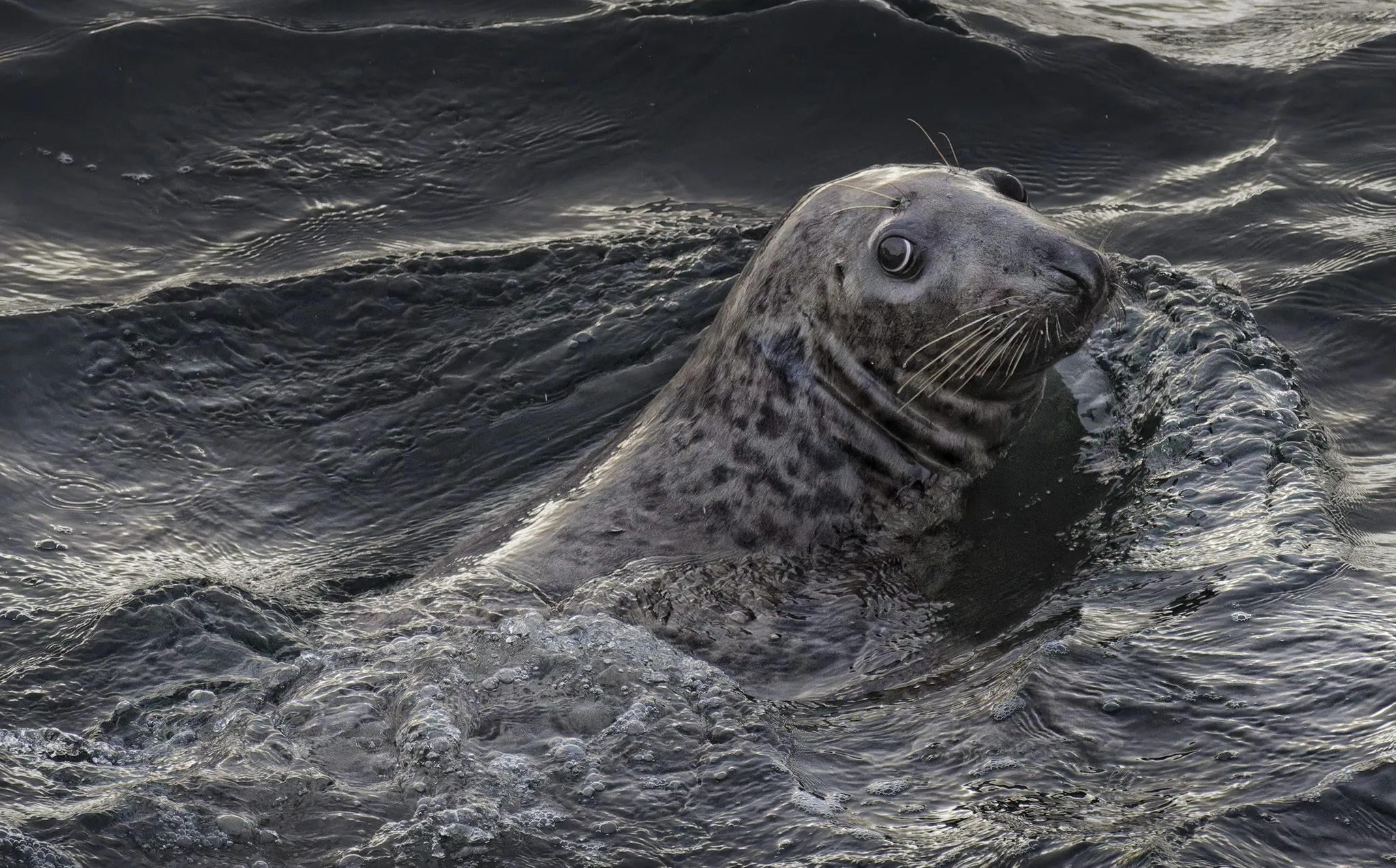
Grey seals are the one thing you can more or less promise a child. The best place by a distance is the Sound, at the southern tip of the island. They haul out on Kitterland, the rocky islet between the mainland and the Calf of Man, and you can watch them from the car park or through the café windows. The Calf itself is the island’s main pupping site, with pups on the rocks in autumn.
The Manx Wildlife Trust also recommends Langness, Maughold Head and the Point of Ayre. You’ll occasionally see a common (harbour) seal among the greys; they’re smaller, with a rounder, dog-like face.
Disturbing a seal is an offence under the Manx Wildlife Act, and it’s easier to do than you’d think. If a hauled-out seal lifts its head to look at you, you’re already too close. A seal that panics off a high rock at low tide can injure itself on the way down. Stay back, stay quiet, and use binoculars.
Basking sharks
The basking shark is the world’s second-largest fish, typically 4 to 6 metres long, and it eats nothing bigger than plankton. According to Manx Whale and Dolphin Watch (MWDW), they’re here from May to August, mostly off Niarbyl, Port Erin, Peel and the Sound, often within a kilometre of the shore. Look for a big triangular dorsal fin moving slowly in a straight line, often with the tip of the tail fin following a few metres behind. That’s one shark, not two.
The bad news: numbers have collapsed. MWDW’s records went from around 500 sighting reports a season in 2010 to 8 in 2021, 68 in 2022 and 17 in 2023. In 2026 there were sightings through July and August off Peel and Port Erin, and a few stragglers into late September (recent sightings (opens in a new tab)). Count one as luck, not a plan.
The old Manx Basking Shark Watch charity no longer operates, so report a basking shark (opens in a new tab) to MWDW.
Dolphins, porpoises and whales
Five species of cetacean are seen regularly in Manx waters: harbour porpoise, Risso’s dolphin, minke whale, bottlenose dolphin and common dolphin.
- Bottlenose dolphins. A pair known as Moonlight and Starlight, a mother and her now-grown calf, live along the Manx coast all year and are often seen close in at Peel, Port Erin and Ramsey Bay. They like boats and paddleboards. MWDW has a code of conduct (opens in a new tab) for meeting them in the water. Between October and March, pods of 100 or more pass along the east coast, off Laxey, Ramsey and Langness.
- Risso’s dolphins return in spring, often first spotted from Marine Drive, and stay through the summer, especially round the south: the Sound, Langness and Niarbyl.
- Harbour porpoises are the most common and the smallest. MWDW says they can be “almost guaranteed” on a very calm summer day at Kallow Point in Port St Mary. Sit by the anchor memorial and watch the water over the limestone ledges.
- Minke whales feed off Marine Drive and Derbyhaven from September to November, sometimes for weeks. They can be close enough to hear breathing. Humpback, fin and sei whales have turned up in past autumns, but rarely.
MWDW’s advice: go on a calm day, watch for diving gannets, and give it an hour, not five minutes. MWDW runs a free live sightings (opens in a new tab) group on Telegram and a visitor centre at 23 Michael Street in Peel (10am to 3pm, Wednesday to Saturday, September 2026).
Wild wallabies
Yes, really. Red-necked wallabies escaped from the Curraghs Wildlife Park in the 1960s and 1970s and settled in the Ballaugh Curragh, the island’s biggest wetland. A Manx Wildlife Trust survey in 2023, using drones and thermal cameras over two nights, counted an average of 568 across 400 hectares of the curragh and surrounding farmland. They’re now reported across the northern half of the island.
To see one, drive or cycle the lanes around the Ballaugh Curragh at dawn or dusk and look along field edges and verges. The lanes round the Close Sartfield reserve, off Windmill Lane, run along the edge of the curragh. They’re shy and well camouflaged, so go slowly.
They’re not universally loved. The government lists them as an invasive, non-native species under the Wildlife Act, inbreeding has left many with eye problems, and conservationists argue about whether they should be culled.
Birds: choughs, hen harriers and seabirds
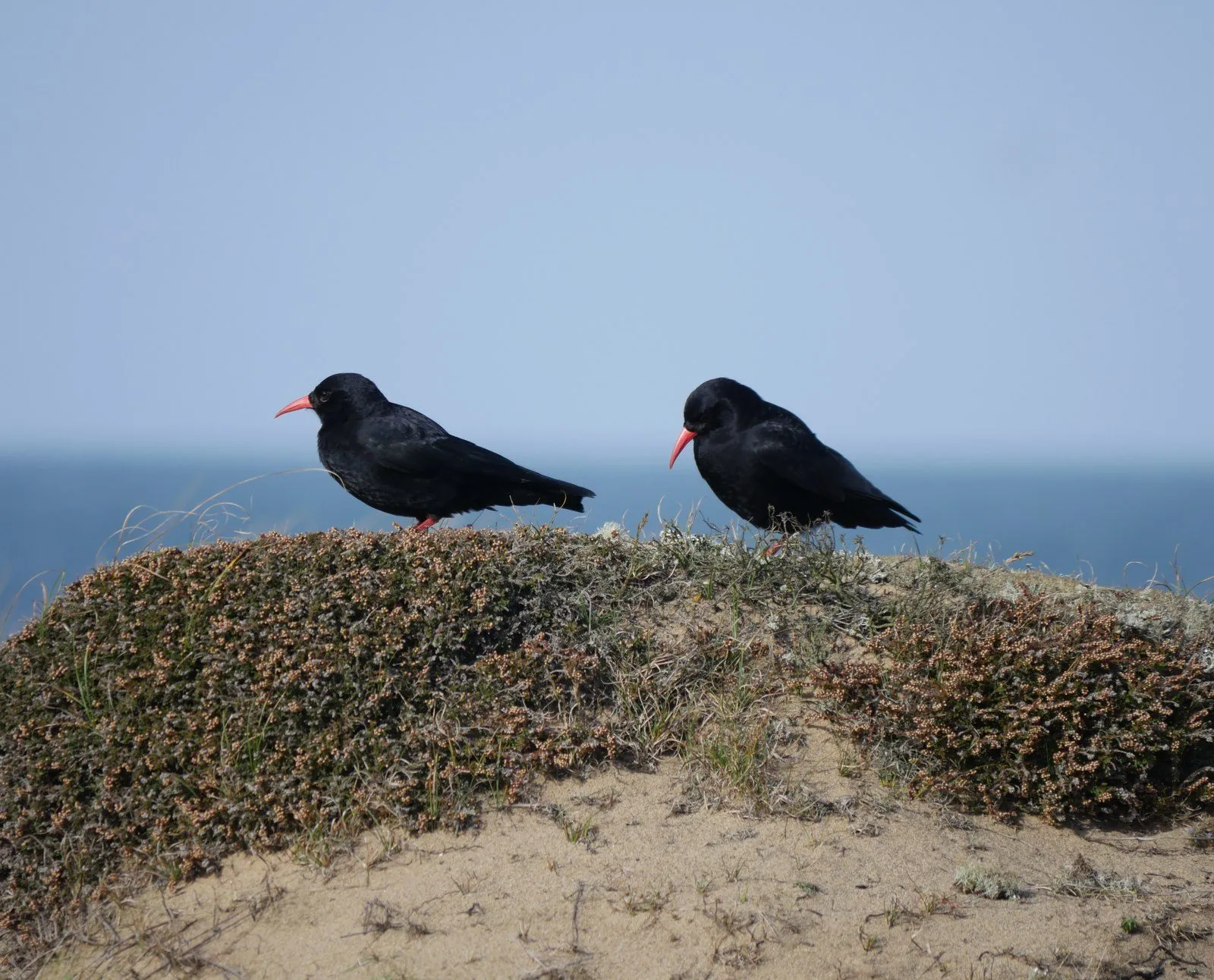
Choughs are crows with red bills and red legs that tumble about over the cliffs. The island is one of their strongholds in the British Isles, though a 2025 Manx BirdLife census (opens in a new tab) found 121 breeding pairs, down 24% since 2014/15. The south coast holds over a third of them. Try the Sound, the Chasms and the Point of Ayre.
Hen harriers breed in the uplands. Manx BirdLife’s 2022 census (opens in a new tab) found 38 territorial pairs, the most since 2004. In winter they come down to roost in the Ballaugh Curragh, which once hosted (opens in a new tab) the largest hen harrier roost in western Europe, with up to 80 birds. Numbers are much lower now, but Manx BirdLife says a visit to the hide from about 90 minutes before sunset, October to March, can still pay off. The hide is on the Manx Wildlife Trust’s Close Sartfield reserve (opens in a new tab) off Windmill Lane, open all year.
Seabirds are at their best from May to July. Guillemots, razorbills, kittiwakes and a few puffins nest on the cliffs round the Sound and the Calf. Gannets dive offshore, and black guillemots nest around Peel harbour. The Manx shearwater is named after the island. It breeds on the Calf, but only comes ashore at night, so day visitors won’t see one on land. The Calf of Man guide has more.
Manx cats and Loaghtan sheep
Two animals are famous for being Manx, and neither is wild.
The Manx cat is a domestic breed, famous for having no tail. You’re more likely to see one on a souvenir tea towel or a Manx coin than in a hedge.
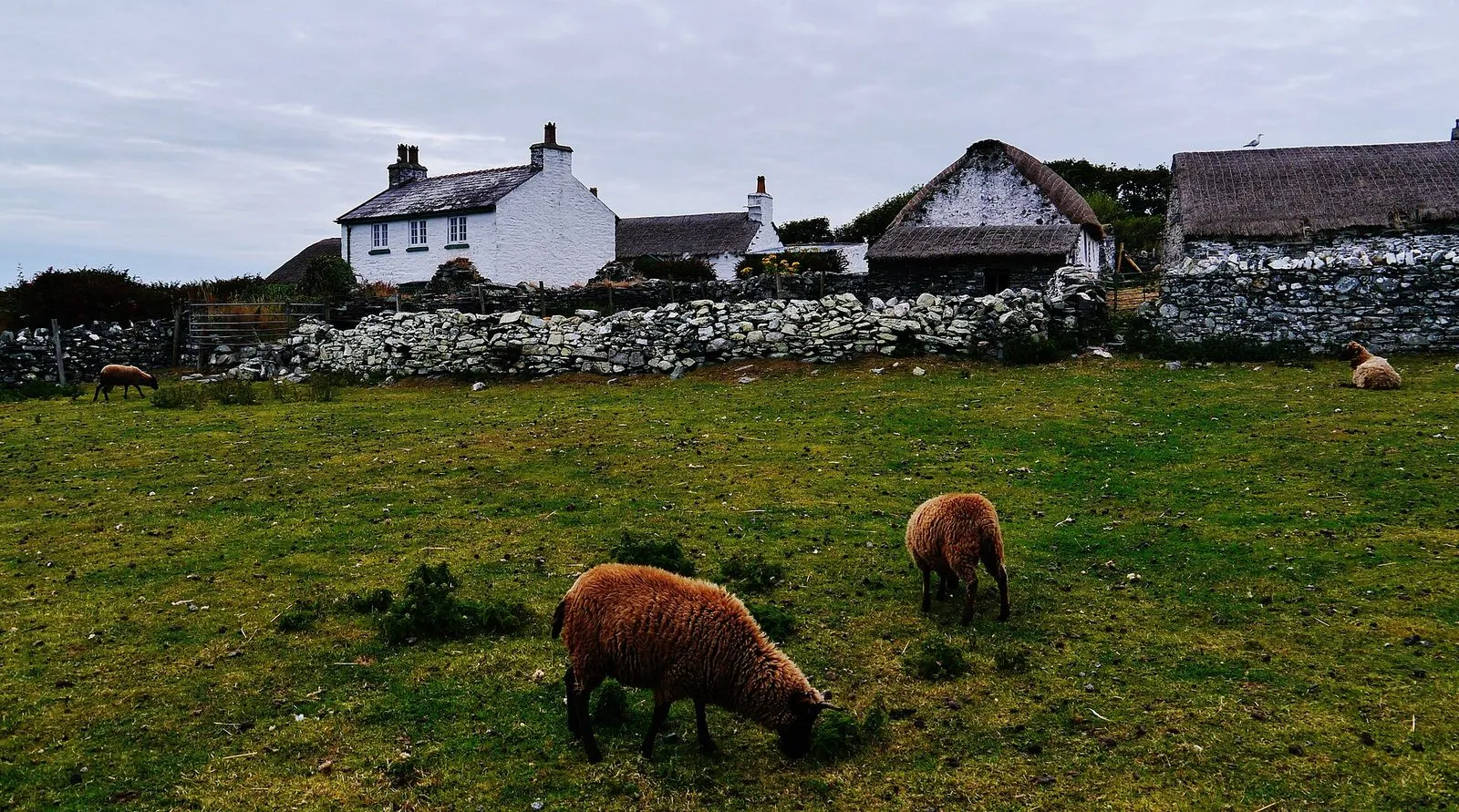
The Manx Loaghtan is a rare breed of sheep with a chocolate-brown fleece. Most have four horns, and some have two or six. The easiest place to see them is Cregneash, the folk village above the Sound, where they graze the fields round the cottages. You can also eat Loaghtan lamb, which has had protected (PDO) status since 2008. See Manx food.
Boat trips
You’ll see most of this from land, but a boat gets you closer to the seals and cliffs and improves your chances of dolphins and sharks. All these sail in summer only, depend on the weather, and need a minimum number of passengers.
| Operator | From | What | Price (September 2026) |
|---|---|---|---|
| Shona Boat Trips (opens in a new tab) | Port Erin | Round the Calf, 2 hrs | £20 adult, £10 child 9 and under |
| Shona Boat Trips (RIB Osprey) | Port Erin | Scenic south coast RIB, 1 hr 45 min | £40 adult, £35 child |
| Port St Mary Calf of Man Boat (opens in a new tab) | Port St Mary | Wildlife trip or Calf landing | From £20 adult |
Shona needs at least six adults unless you arrange otherwise. Book by phone and keep a spare day, because trips are cancelled at short notice. MWDW keeps a list of operators (opens in a new tab), including coastal and fishing trips from Peel and Port St Mary. For landing trips to the Calf, see the Calf of Man.
Getting to the spots
Most of the best places need a car. The Sound has had no bus service since 2024, according to MWDW, so without a car it’s a walk from Port Erin or Cregneash. Peel, Port Erin, Port St Mary, Ramsey and Laxey all have regular buses. Langness has no public transport; the nearest is the airport bus. See getting around, and the glens and walks for wildlife-friendly days on land.
— The Guru
Common questions
When is basking shark season on the Isle of Man?
Basking sharks usually arrive in May and stay through the summer until August, with a few into September. Most sightings are off the south and west coasts, often within a kilometre of the shore, at Niarbyl, Port Erin, Peel and the Sound. Numbers have fallen sharply since about 2010.
Are there really wallabies on the Isle of Man?
Yes. Red-necked wallabies escaped from the Curraghs Wildlife Park in the 1960s and have bred in the wild ever since. A 2023 Manx Wildlife Trust drone survey counted an average of 568 in and around the Ballaugh Curragh, and they're now reported across the north of the island.
Where can you see dolphins on the Isle of Man?
From land at Peel, Port Erin, Ramsey Bay, Langness, Marine Drive and the Sound. A resident pair of bottlenose dolphins is often seen close in at Peel, Port Erin and Ramsey, and big bottlenose pods pass the east coast between October and March.
What is the best time of year for wildlife on the Isle of Man?
Late May to August for basking sharks, seabirds, Risso's dolphins and porpoises. September to November for minke whales, seal pups and autumn migrants. October to March for big bottlenose dolphin pods and hen harriers coming in to roost.